
The Challenge of Community Engagement
On Monday, we visited a demonstration verge garden in the City of Moreton Bay area. Like many other councils, they are exploring ways to get the community involved in greening our streets.

As part of their group’s verge garden project, ACF Community Brisbane Northside holds a monthly verge visit. This morning, they visited one of the new demonstration gardens set up by City of Moreton Bay Council.
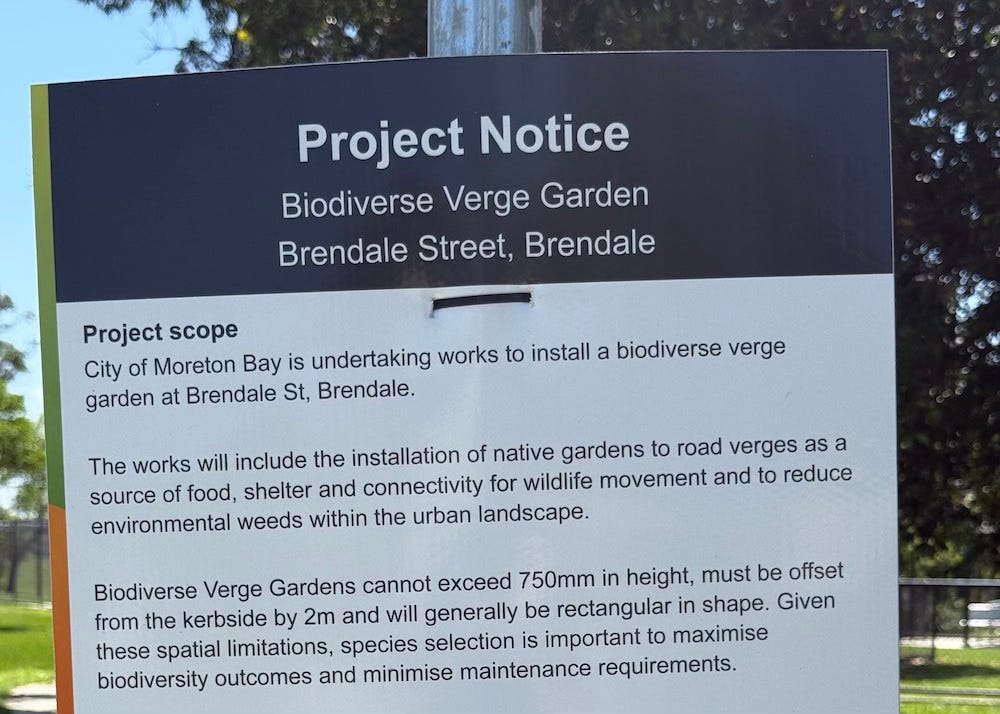
Moreton Bay’s verge garden policy and the new information pack can be downloaded from this page on their website. Although their policy allows food and other plants, the information pack reflects their preference for local native plants.
It shows how to get a free report on your bioregion (Queensland-wide), and has plant lists for each region and links to local community nurseries, instructions on how residents can request street trees and get free native plants, and a single-page, printable factsheet for each of the three gardens.
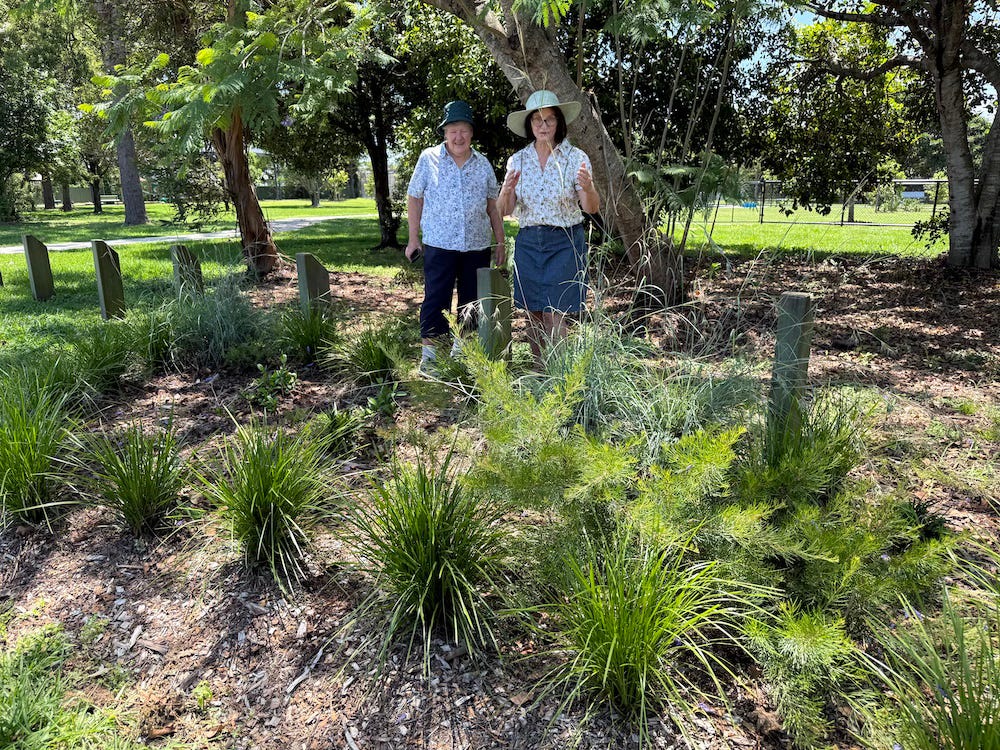
Janet was inspired by the plants and identified some that she will use to create a native verge garden in front of her home.
You’ll notice that this demonstration garden is in front of a park. That’s because of the complexity of governance around verge gardens. Councils planting in front of selected private properties would raise all sorts of issues with public funding and ongoing maintenance. Residents planting and maintaining the verge garden in front of their own properties is the simplest solution. If only more residents would do it.
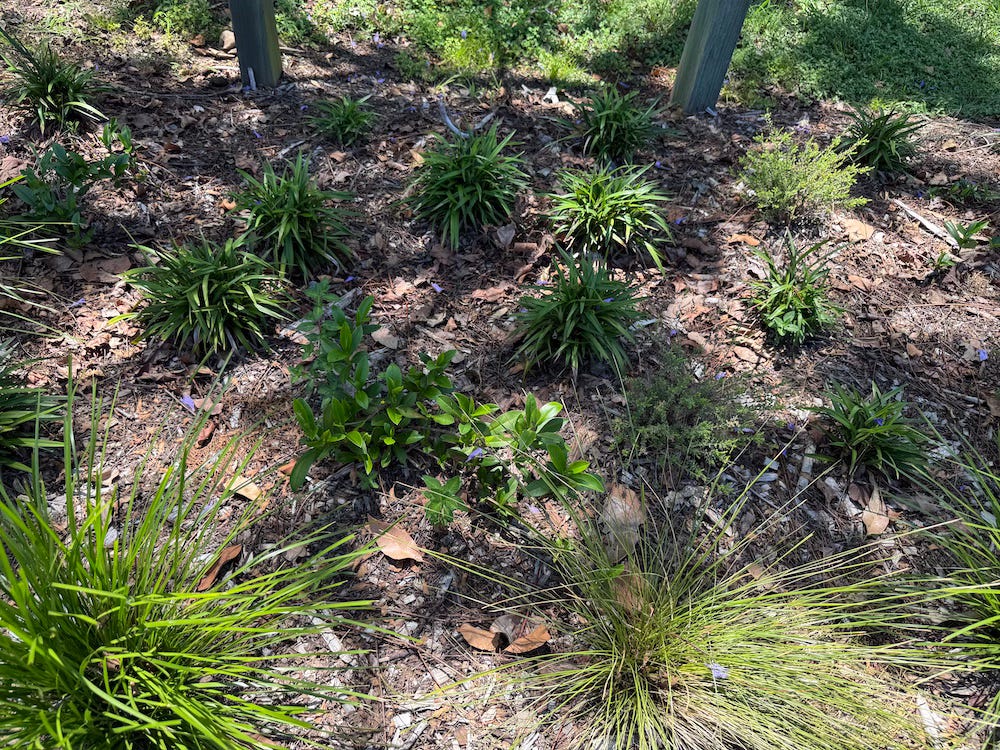
It was useful having the plant lists for each garden and being able to see each plant established in a garden rather than in a pot in a nursery.
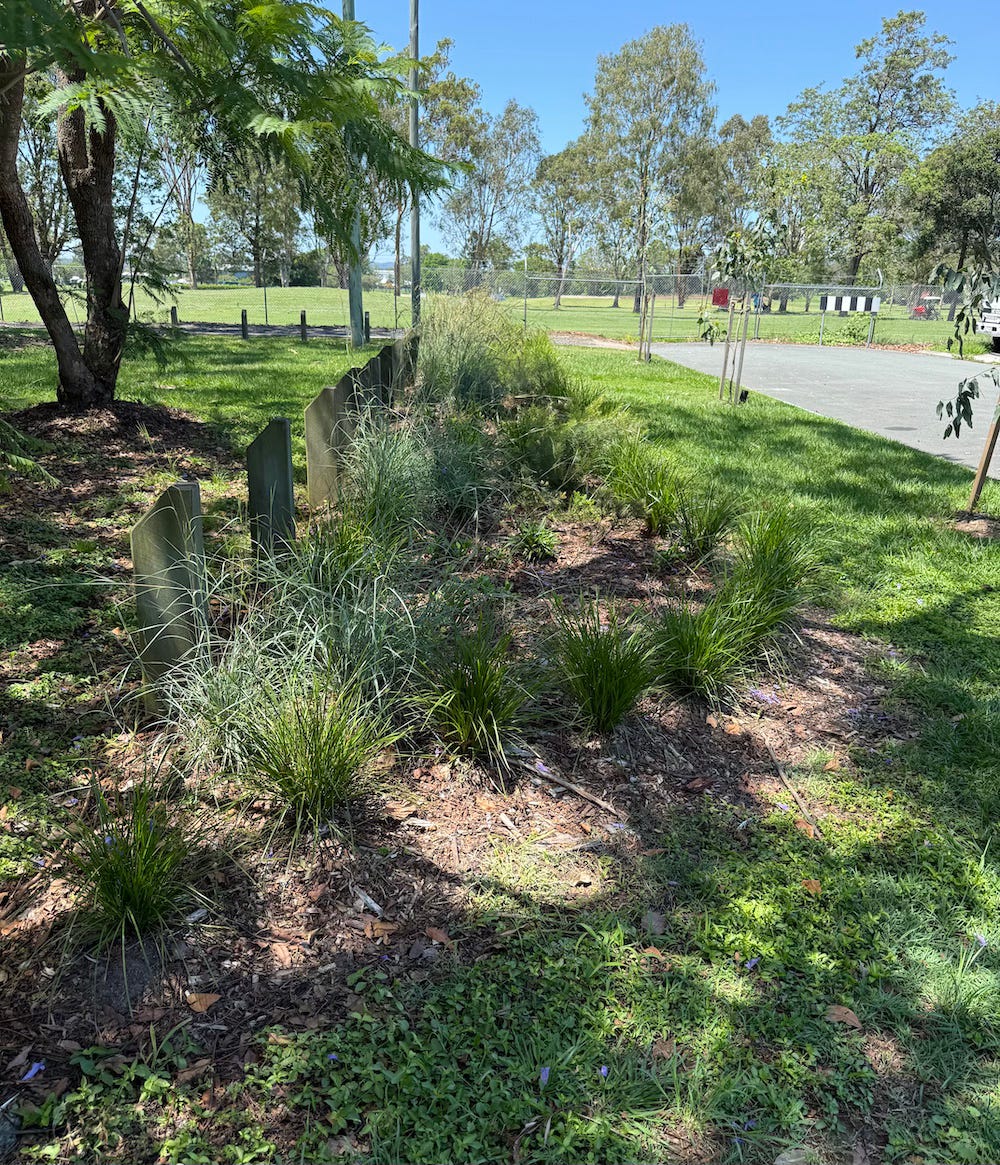
Looking south, you get the sense of a corridor with the garden, grass path, and three new street trees. The interface with the grass is a problem shared by verge gardeners without a paved footpath. It means ongoing weeding. Many home gardeners manage using a whippersnipper or edge cutter.
We debated whether grasses like the Cymbopogon refractus (Barbed Wire Grass) work in verge gardens. On one hand, they look like weeds to many people and may put them off verge gardens; on the other, including them broadens the knowledge of native plants and attitudes towards what is normal. What do you think?
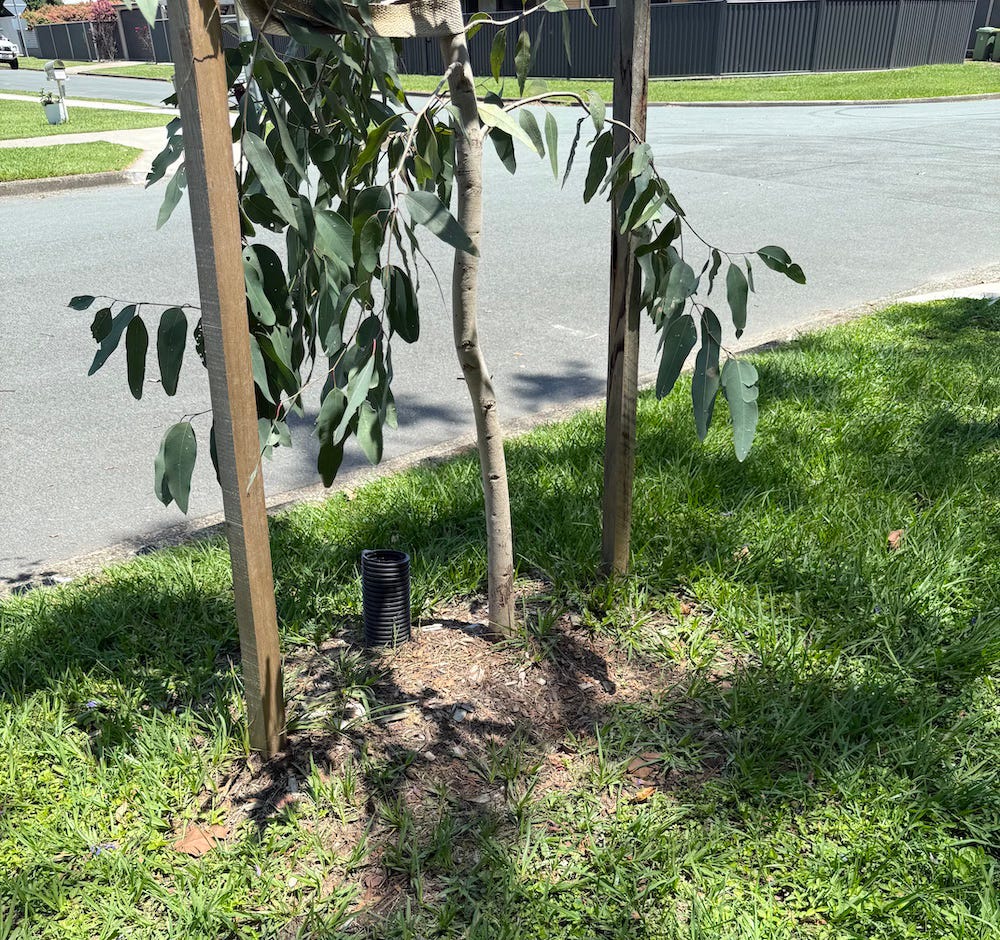
Like many councils, Moreton Bay restrict planting around street trees to protect the roots.
I will leave a distance of 1 metre around tree trunks that are less than 300mm in diameter, to protect the health of trees and their root systems. For trees with trunks greater than 300mm in diameter, 2m will be left. I will not cut, damage or remove tree roots to facilitate planting. (checklist)
This is an understandable ruling when you think about the way some verge gardens are done. As we progress, perhaps a more nuanced approach where verge gardens are encouraged around the new trees to keep the grass, mowers, and cars away from the tree can be worked out. For established trees, careful removal of grass and placement of small tubestock can protect exposed roots from mowing equipment. But these rely on good communication and trust between residents and council, and building the public regard for street trees. How might we do that?
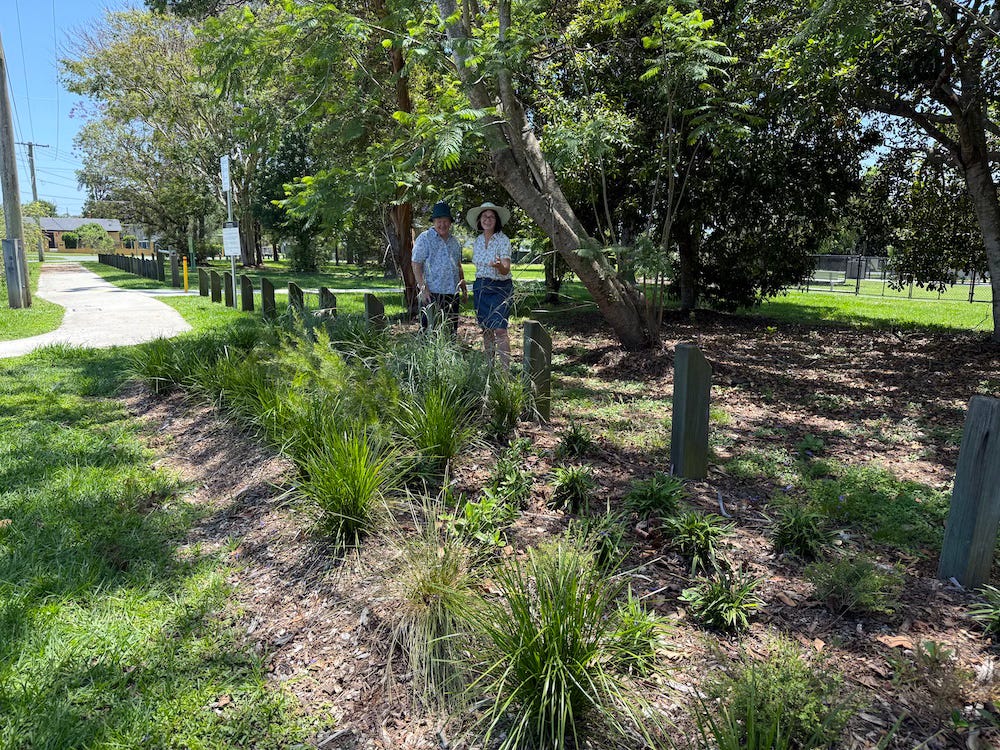
This long shot shows the footpath and street. The nearby bus stop and the path into the park means that this verge garden, and the sign, will be noticed by many local residents. Being public and where people will see them as part of their daily lives is a major strength of verge gardens in raising awareness.
Important as they are, awareness, education, legislation, and incentives, can only take us so far. If they were enough, we’d have solved many social and environmental problems long ago.
A Collaborative Approach
This council has excelled at providing information and education about biodiversity. Perhaps now, it’s up to all of us to extend the conversation and reach into the community.
That is the approach I explore in the book, Garden on the Verge: A New Approach.
Paperback and ebook 15% discount for direct sales ends 30 November. Also available from independent bookstores, Booktopia, or ask your local library to get a copy.
Book Review
From: Short books, big impact: books on the verge by Anna Featherstone, author of Honey Farm Dreaming and Small Farm Success Australia, plus author mentor and publisher of Look-It’s Your Book! guide to self-publishing in Australia.
The book is consciously sparing, refreshing, informative, optimistic, wise, grounded and gives a holistic view of the benefits, risks and how-to of nature strip gardening. It’s a framework for collaboration between individuals, councils and communities for the benefit of all.